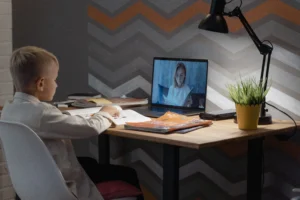
If you are a parent in Ho Chi Minh City, Hanoi or Da Nang, you have probably noticed how quickly the education conversation has shifted. International school fees keep climbing, commutes eat into family time, and many children are quietly disengaging from one-size-fits-all classrooms. That is why searches for an online school in Vietnam have grown so sharply among both Vietnamese and expatriate families. This guide walks you through how virtual schooling works, what separates a strong provider from a weak one, and the questions worth asking before you enrol.
Why are parents in Vietnam considering virtual school?
Three pressures usually push families towards this option.
The first is cost. A premium international school place in Vietnam can run into hundreds of millions of dong each year, and that figure rarely includes transport, uniforms or extras. A structured online school in Vietnam removes most of those overheads while keeping the same international curriculum.
The second is mobility. Families who relocate for work, travel between countries, or split time between Vietnam and home need a school that moves with them.
How does homeschooling in Vietnam actually work?
There is a common misconception that homeschooling in Vietnam means parents teaching every subject at the kitchen table. Accredited providers work very differently.
A typical week looks like this:
- Live, timetabled lessons with qualified subject teachers, usually across a four to five hour morning block
- Small class sizes, often capped around ten learners, so participation is unavoidable in a good way
- Independent practice in the afternoon, freeing time for sport, music, languages or family
- Regular assessment benchmarked against Cambridge standards rather than informal parent grading
- Optional one-on-one mentorship for subjects where a learner needs to stretch or catch up
Parents supervise. They do not teach. That distinction matters enormously for working families.
What should you look for in homeschools in Vietnam?
Not every provider deserves your trust. When you compare homeschools in Vietnam, weigh these five factors carefully.
Accreditation. Ask which examination board the curriculum aligns with. Cambridge IGCSE and A Level qualifications are recognised by universities worldwide, including in Vietnam, Australia, the United Kingdom and North America.
Teacher quality. Pre-recorded video libraries are cheap to produce and easy to ignore. Insist on live teaching from trained educators.
Pastoral care. Academic results follow emotional stability. Look for schools that build wellbeing and social connection into the model.
Transparency on fees. Published pricing is a signal of confidence.
Choosing a homeschooling academy in Vietnam
The right homeschooling academy in Vietnam will feel less like a website and more like a school with a philosophy. Dreamtime Learning Asia, part of a group with more than three decades of educational innovation behind it, delivers exactly that model to families across Asia. Learners follow the Cambridge IGCSE curriculum in small live batches, supported by expert teachers and optional Elite one-on-one mentoring.
Frequently asked questions
Is homeschooling legal in Vietnam? Vietnamese law requires compulsory education, and families typically enrol with an accredited international online school so their child holds a recognised qualification. Check your current status with the provider and, where relevant, your embassy.
Will my child still receive a recognised certificate? Yes. Learners on a Cambridge pathway sit the same IGCSE and A Level examinations as students in physical schools, usually at an approved test centre.
How much does an online school in Vietnam cost? Fees vary by stage and learning style, but virtual schooling generally costs a fraction of an international campus place.
Will my child become isolated? Live classes, group projects and community events keep learners socially engaged, and reclaimed afternoons often expand a child’s social life rather than shrink it.
What age can we start? Most providers accept learners from the early primary stages right through to upper secondary.
To explore a modern, research-backed, and innovation-driven learning system, visit: https://dreamtimelearning.my/